
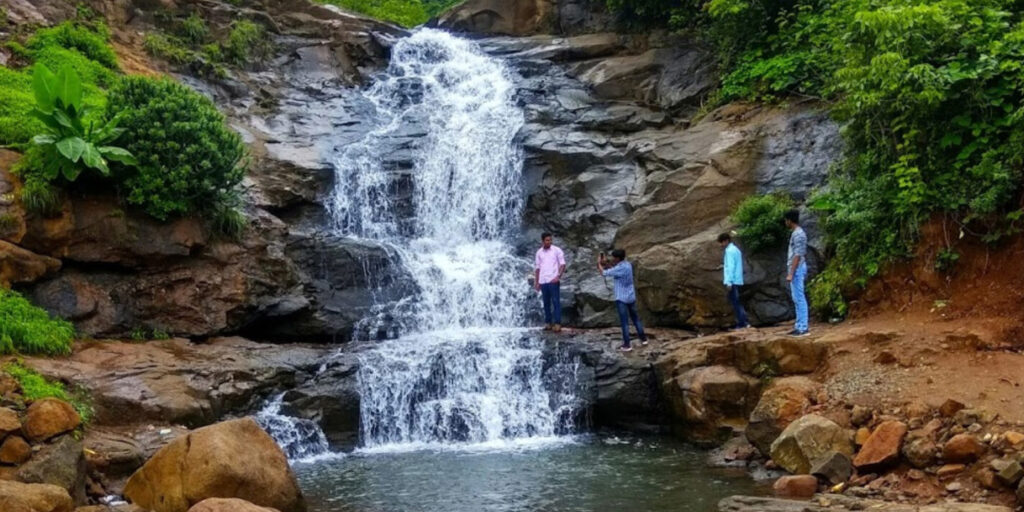
The Bhaje Waterfall near Lonavala is one of those rare natural attractions that genuinely takes visitors by surprise with how beautiful and dramatic it turns out to be compared to what they expected. Located right next to the ancient Bhaje Caves, this seasonal waterfall appears every monsoon and runs strong through September, creating a stunning visual combination of flowing water, ancient rock-cut architecture, and vivid green Sahyadri hillsides that very few spots in Maharashtra can match. Getting the timing right for a visit is what separates a truly spectacular experience from a disappointing dry rock face.
What Is Bhaje Waterfall and Why It Is Worth Visiting
Bhaje Waterfall is a seasonal monsoon waterfall located adjacent to the Bhaje Caves, a 2,200-year-old Buddhist rock-cut heritage site near Lonavala in the Western Ghats of Maharashtra. Unlike purpose-built tourist attractions, this waterfall exists purely as a natural phenomenon triggered by monsoon rainfall on the Sahyadri plateau above, which is what makes it so visually powerful and authentic when seen in full flow. Visitors who combine the Bhaje Waterfall with a cave visit and a broader Lonavala monsoon trip consistently rate it as one of the most memorable natural experiences of their entire visit to the region.
Best Time to Visit Bhaje Waterfall by Month
Understanding the month-by-month behaviour of the Bhaje Waterfall helps visitors plan a trip that delivers the experience they are actually hoping for rather than arriving at a trickle or a completely dry formation. The waterfall is entirely dependent on monsoon rainfall and follows a seasonal pattern that experienced local visitors and regular trekkers in the Lonavala area have observed consistently across multiple years. Knowing which month offers which version of the waterfall allows travellers to set the right expectations and choose the slot that best matches their preference for dramatic flow versus manageable crowds and safer trail conditions.
Month-by-Month Guide to Visiting Bhaje Waterfall
Here is what visitors can realistically expect from the Bhaje Waterfall across each phase of the monsoon and post-monsoon season near Lonavala.
June — First Rains and Early Flow
June marks the beginning of the monsoon and the first appearance of the Bhaje Waterfall after months of inactivity, typically starting as a thin but exciting stream that grows stronger with each passing week of rainfall. The surrounding hillside turns fresh green almost overnight, and the combination of early monsoon mist and the first waterfall flow makes June a surprisingly beautiful time to visit for those who prefer smaller crowds and a more serene experience. Trail conditions are still manageable in early June, making it one of the more comfortable months for a combined waterfall and cave visit at Bhaje.
July — Peak Flow and Most Dramatic Views
July is widely regarded as the best month to visit Bhaje Waterfall for sheer visual impact, with consistent heavy rainfall pushing the waterfall to its most powerful and dramatic flow that fills the entire cliff face with thundering white water against a backdrop of deep green monsoon jungle. The surrounding Bhaje Caves look extraordinary framed by the waterfall on one side and the vivid green hillside on the other, creating one of the most photogenic natural scenes in the entire Lonavala region. Visiting on a weekday in July rather than the weekend significantly reduces the crowd experience and makes the visit more peaceful and enjoyable.
August — Strong Flow with Slightly Better Trail Conditions
August continues to offer strong Bhaje Waterfall flow with the added advantage of slightly more predictable rainfall patterns compared to the intense and sometimes continuous downpours of July, making trail conditions a little more manageable for families and first-time visitors. The waterfall remains powerful and visually stunning through most of August, and the lush green landscape around the Bhaje site is at its most vivid and rich during this period. Visitors consistently describe August as the sweet spot between dramatic flow and reasonable trail safety, making it a reliable choice for planning a visit.
September — Tapering Flow and Calmer Conditions
September brings a gradual tapering of the Bhaje Waterfall as monsoon rainfall becomes lighter and less frequent, though the waterfall typically continues to run through most of the month with enough volume to remain visually satisfying for visitors. The trail conditions improve significantly in September, crowds thin out compared to July and August, and the surrounding landscape retains its lush green character without the intensity of mid-monsoon rainfall making outdoor movement uncomfortable. September is the preferred choice for visitors who want a quieter, safer, and more relaxed waterfall experience without sacrificing the beauty of the monsoon landscape entirely.
What to Combine with a Bhaje Waterfall Visit
A Bhaje Waterfall visit works best as part of a broader half-day or full-day Lonavala itinerary that takes advantage of the proximity of several excellent attractions within a short driving distance of the site.
Bhaje Caves — Ancient Heritage Right at the Waterfall
The Bhaje Caves sit directly alongside the waterfall and are one of the most compelling reasons to visit this site even beyond the waterfall itself, offering 2,200-year-old Buddhist rock-cut architecture with intricate carvings and a dramatic hillside setting that makes for an extraordinarily rich cultural and natural experience in a single location. Most visitors who come specifically for the Bhaje Waterfall end up spending as much time inside the caves as they do watching the waterfall, because the two together create a layered experience that neither provides alone.
Karla Caves — A Natural Pairing for a Heritage Day
The Karla Caves are located just a short drive from Bhaje and make an excellent companion stop for anyone visiting the Bhaje Waterfall on a broader heritage and nature day around Lonavala. The Karla site features one of India’s largest and best-preserved ancient Buddhist chaitya halls, and visiting both cave complexes in the same trip gives travellers a genuinely comprehensive introduction to the Sahyadri’s extraordinary ancient rock-cut heritage across a single comfortable morning.
Tiger’s Point for Monsoon Valley Views
Adding a stop at Tiger‘s Point to a Bhaje Waterfall visit gives travellers the dramatic high-altitude valley perspective that the waterfall site itself does not provide, with clouds filling the gorge below and mist rolling across the cliff edge, creating a completely different but equally stunning monsoon scene. The two stops complement each other perfectly as a morning combination, and both are best experienced before 10 AM when the mist is still present and crowds are light.
Lonavala Monsoon Sightseeing Circuit
Experienced Lonavala visitors who return season after season recommend building the Bhaje Waterfall into a broader monsoon sightseeing circuit around Lonavala that also includes Bhushi Dam, Kune Falls, and a Khandala sunset drive for a complete and deeply satisfying single-day or two-day monsoon experience. Structuring the day with waterfall and cave visits in the morning and dam or viewpoint stops in the afternoon takes advantage of the best light and the most manageable crowd windows at each location.
Practical TIPS and Where to Stay Near Bhaje Waterfall
Getting the most out of a Bhaje Waterfall visit requires a little advance preparation, the right gear, and a comfortable resort base to return to after a day of monsoon sightseeing near Lonavala.
Reach Early and Visit on Weekdays
Arriving at the Bhaje site before 9 AM on a weekday gives visitors the waterfall almost entirely to themselves, which makes a significant difference to the quality of the experience compared to arriving after 11 AM on a weekend when both the trail and the cave entrance can become uncomfortably busy. The waterfall looks its most dramatic in the soft morning light before the midday brightness flattens the visual depth of the cascading water against the green hillside backdrop.
Wear Grip Footwear and Carry Rain Gear
The trail to the Bhaje Caves and waterfall viewpoint is a short but moderately steep climb on uneven stone steps that become genuinely slippery during and after heavy monsoon rain, making proper waterproof grip shoes an essential rather than an optional packing decision for this visit. Carrying a light raincoat or poncho and a dry bag for electronics protects against the sudden heavy showers that are common in the Lonavala area between July and September, particularly during the late morning and afternoon hours.
Stay at Govinda Resorts for a Complete Monsoon Experience
Govinda Resorts in Lonavala is an excellent base for a Bhaje Waterfall visit, offering comfortable cottages and suites, a pure veg restaurant, a scenic swimming pool, and on-site go-karting within a lush green Sahyadri setting that looks its most beautiful during the monsoon months when the surrounding hills are at their greenest and most dramatic. Staying overnight at the resort allows visitors to plan the Bhaje Waterfall visit as an early morning activity and spend the rest of the day exploring other Lonavala monsoon attractions without any time pressure or return journey rush.
Book Resort Stays in Advance for Monsoon Weekends
Lonavala resort availability drops sharply during July and August weekends when demand from Mumbai and Pune travellers peaks simultaneously, making advance booking of three to four weeks essential for anyone planning a Bhaje Waterfall trip that includes an overnight resort stay. Govinda Resorts accepts advance bookings through their website, and confirming accommodation early also allows visitors to plan their full monsoon itinerary around the resort schedule without last-minute changes or availability stress.
The Bhaje Waterfall is at its most spectacular between July and September when monsoon rainfall pushes the cascade to its full and dramatic potential against one of Maharashtra’s most beautiful and historically rich natural settings. Timing the visit right, combining it with the Bhaje and Karla Caves, and choosing a comfortable monsoon base like Govinda Resorts in Lonavala gives travellers everything they need for a genuinely memorable and well-rounded waterfall experience. Plan ahead, pack right, and the Bhaje Waterfall will deliver exactly what its reputation promises.
Frequently Asked Questions
1. When is the best time to visit Bhaje Waterfall?
The best time to visit Bhaje Waterfall is between July and September during the monsoon season, when rainfall pushes the waterfall to its most dramatic and powerful flow. July offers peak visual impact while September provides calmer trail conditions, lighter crowds, and a more relaxed visit experience for families and first-time visitors.
2. Is Bhaje Waterfall open year-round?
No, Bhaje Waterfall is a seasonal monsoon waterfall that only flows between June and September, depending on rainfall levels in the Sahyadri range above Lonavala. Outside the monsoon season, the waterfall site is dry, and the main attraction becomes the ancient Bhaje Caves, which can be visited throughout the year regardless of season.
3. What can I combine with a Bhaje Waterfall visit near Lonavala?
The best combinations with a Bhaje Waterfall visit include the Bhaje Caves on the same site, Karla Caves a short drive away, Tiger’s Point for monsoon valley views, and Bhushi Dam for an afternoon waterfall experience. Together, these make a complete and highly rewarding single-day monsoon sightseeing circuit around Lonavala.
4. Where should I stay for a Bhaje Waterfall trip near Lonavala?
Govinda Resorts in Lonavala is a great stay option for a Bhaje Waterfall trip, offering comfortable rooms, pure veg dining, a pool, and on-site go-karting in a lush green monsoon setting. Booking three to four weeks in advance is strongly recommended as monsoon weekends in Lonavala fill up very quickly from both Mumbai and Pune.
FAQs
The best Lonavala places to visit in summer include Tiger's Leap, Karla Caves, Lohagad Fort, and Lonavala Lake. These spots offer a great mix of nature, adventure, history, and fun that suits all age groups. The cool hill climate makes outdoor sightseeing comfortable even during the peak summer months of April, May, and June.
Yes, Lonavala is a great place to visit in summer because its high altitude keeps it naturally cooler than cities like Mumbai and Pune. The weather from March to early June is pleasant in the mornings and evenings, making outdoor sightseeing very comfortable for the whole family. It is one of the most popular summer vacation places in Maharashtra and is easily accessible from both Mumbai and Pune by road or train.
Two to three days are enough to comfortably cover all the top Lonavala places to visit in summer at a relaxed pace. On day one, explore viewpoints and lakes; on day two, visit Karla Caves and do a trek; and on day three, explore forts or Pawna Lake. Families with younger children may prefer four days for a more leisurely and stress-free trip.
Govinda Resorts is one of the best family-friendly places to stay in Lonavala, offering pure veg meals, comfortable rooms, a swimming pool, and a peaceful green setting that families love. The resort is well-located for visiting all the major Lonavala sightseeing spots during a summer trip. Booking in advance is recommended as family resorts fill up quickly during the April to June summer holiday season.